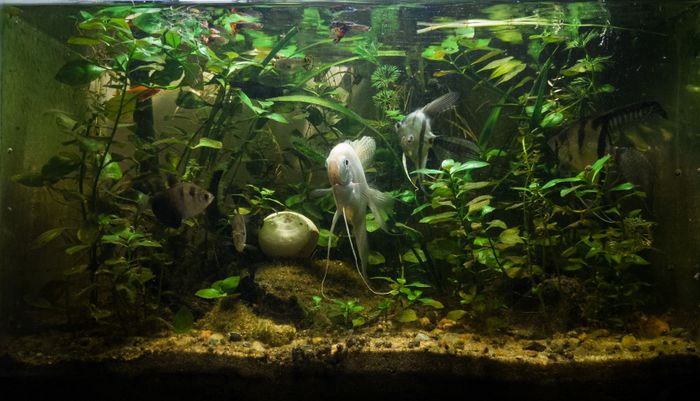
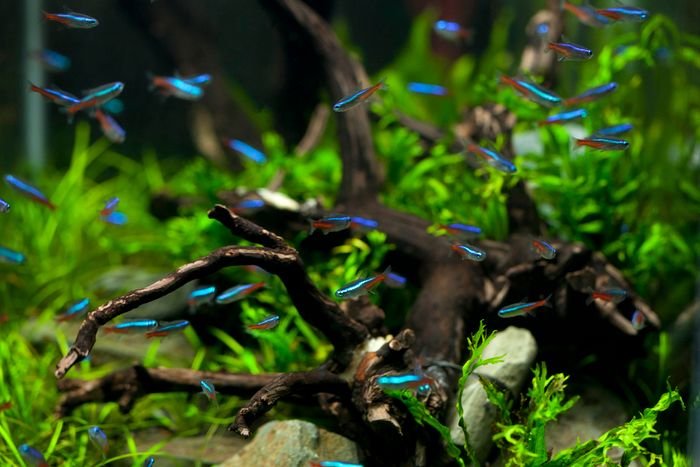
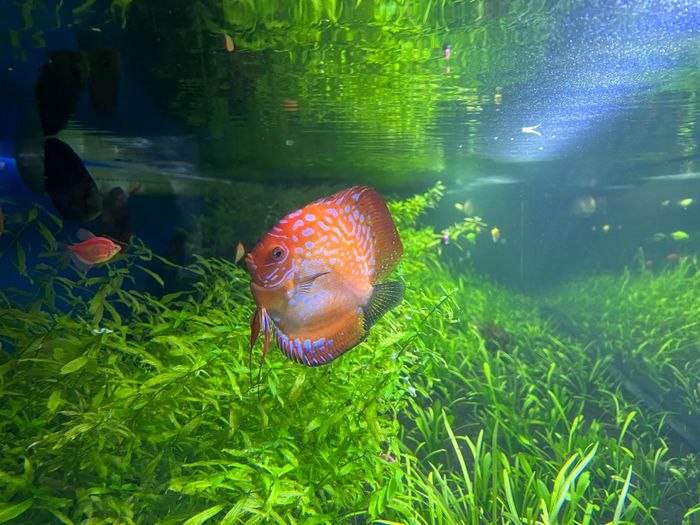
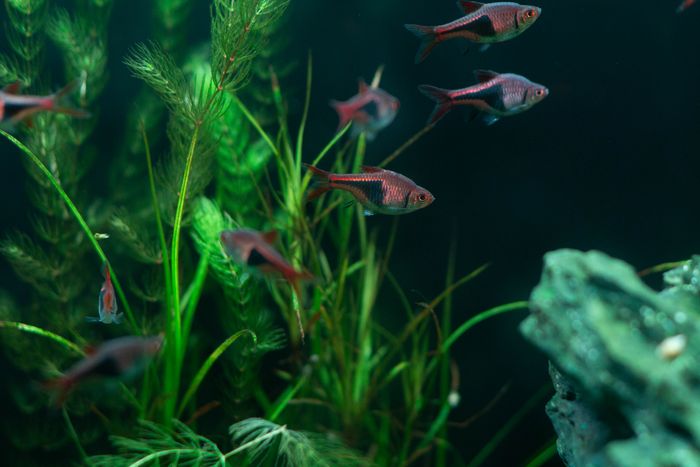
Sent in by readers, published with parameters and problems attached. The tanks with something wrong are the useful ones.
Setup: 60 × 30 × 36 cm, aquasoil, pressurised CO2 at 25 ppm, 7-hour photoperiod, EI dosing, 50% weekly change.
Plants: Microsorum on the wood, Cryptocoryne wendtii mid-ground, Rotala rotundifolia at the back, Eleocharis carpet.
The problem: the carpet thins in the front left corner and always has.
What we would change: that corner is a flow dead spot — the outflow is aimed across the back and returns down the right side, so detritus settles front-left and the Eleocharis suffocates under it. Turn the outflow to sweep along the front glass. Nothing wrong with the fertiliser regime; this is a plumbing problem wearing an algae costume.
Setup: 45 × 27 × 30 cm, inert gravel with root tabs, no CO2, 6-hour photoperiod, 30% change fortnightly.
Plants: Anubias barteri, Bucephalandra, Cryptocoryne, one large Vallisneria stand.
The problem: none, really. Included because it is three years old, takes twenty minutes a fortnight and looks better than most CO2 tanks at eight months.
The lesson: a tank built entirely from slow plants is genuinely low-maintenance. The reason this is not the standard advice is that it takes a year to look full, and almost nobody is willing to wait.
Setup: 90 × 45 × 45 cm, aquasoil, CO2, high light, lean dosing, 50% weekly.
Plants: Hemianthus callitrichoides only, three seiryu stones.
The problem: hardness has climbed from 4 to 11 dGH over five months and the shrimp are not breeding.
What we would change: the stone is doing it. Seiryu is limestone-bearing and dissolves continuously. Either accept the hardness and keep species that suit it, or rebuild with dragon stone. Water changes with softer water slow the climb but do not stop it — the source is inside the tank.
Photographs, tank dimensions, substrate, lighting and photoperiod, CO2 or not, dosing regime, water change schedule, and what is bothering you about it. The last one is the important field. Send it here.